
TL;DR
- A periodontist is a dental specialist who focuses on the gums, jawbone, and structures that support your teeth.
- Periodontists complete three additional years of training beyond dental school, specializing in diagnosing and treating gum disease and placing dental implants.
- While your general dentist handles routine care, a periodontist steps in when gum disease progresses beyond what routine cleanings can address.
- Most patients are referred by their general dentist, but you can also contact a periodontist directly without a referral.
- Early treatment of gum disease prevents bone loss, which cannot be reversed once it occurs.
What Is a Periodontist and Why Would You Need One?
Gum disease is more common than many people realize. According to the Centers for Disease Control and Prevention (CDC), nearly half of U.S. adults aged 30 and older have some form of periodontal disease. Because the condition often develops gradually and may not cause pain in its early stages, many people do not realize they need specialist care until significant damage has already occurred.
A periodontist is a dental specialist trained to diagnose and treat diseases of the gums and the bone that holds your teeth in place. If your general dentist has told you that your gum disease needs more advanced care, or if you are exploring dental implants, a periodontist is the right specialist to see. A periodontist is simply a dentist who went back for three additional years of specialty training to focus entirely on the supporting structures of your teeth: the gums, periodontal ligament, and jawbone. They are to your gums what an orthodontist is to teeth alignment.
What Does a Periodontist Do?
The definition of a periodontist covers both diagnosis and treatment. In practice, a periodontist’s work falls into a few main areas.
Gum Disease Treatment
This is the most common reason patients are referred. When gum disease advances past gingivitis into periodontitis, bacteria have worked their way below the gumline and begun attacking the bone. A periodontist performs scaling and root planing (a deep-cleaning procedure that removes buildup from below the gum surface) and, when necessary, pocket reduction surgery to reduce the depth of infected gum pockets. For patients whose gum tissue has already receded, graft surgery can restore coverage and protect exposed tooth roots.
Dental Implants
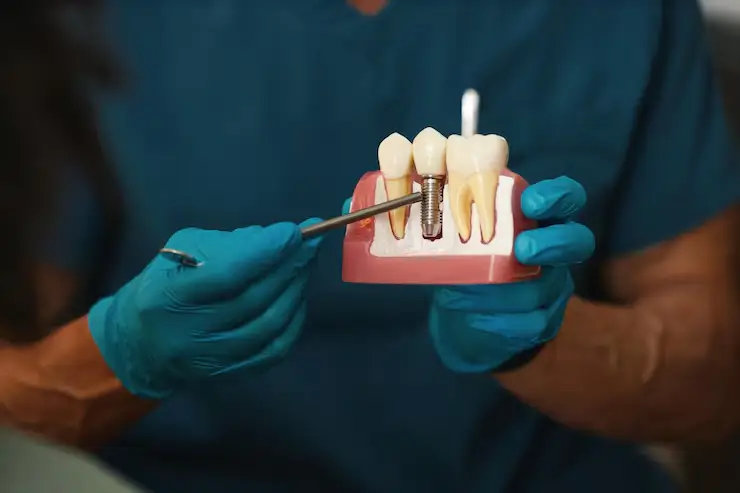
Dental implants are the other major part of what periodontists do. Since they anchor directly into the jawbone, placing them requires expertise in bone density and gum tissue health. Periodontists evaluate whether you have enough bone to support an implant, manage any bone grafting needed beforehand, and place the implant itself.
Crown Lengthening & Laser Therapy
Beyond the above two areas, periodontists also perform crown lengthening (reshaping the gumline to expose more of the tooth crown) and offer laser therapy as a less invasive option for treating gum disease. Laser-assisted treatment targets infected tissue with a concentrated beam of light, which some patients find more comfortable than traditional surgery.
One thing that does not change, regardless of the procedure, is that periodontists work alongside your general dentist, not instead of them. They handle the specialty portion of your care and send detailed notes back to your regular dental office so your overall treatment stays coordinated.
Periodontist vs. Dentist: Understanding the Difference
The difference between a periodontist and a dentist comes down to the scope of training and the types of problems each one treats.
| Aspect | General Dentist | Periodontist |
| Education | Four years of dental school | Four years of dental school plus three years of postgraduate specialty training |
| Primary Focus | Overall oral health and routine dental care | Health of the gums, supporting tissues, and jawbone |
| Common Treatments | Cleanings, fillings, crowns, bridges, basic extractions, and preventive care | Scaling and root planing, gum grafts, periodontal surgery, dental implants, and treatment of advanced gum disease |
| Gum Disease Care | Diagnoses and treats mild gingivitis and early-stage gum disease | Treats moderate to severe periodontal disease, bone loss, deep pockets, and gum recession |
| Surgical Training | Limited to routine dental procedures | Advanced training in periodontal and implant surgery |
| When You May Need One | For regular check-ups and general dental concerns | When gum disease has progressed or requires specialist treatment |
| Relationship to Care | Provides ongoing routine dental care and may refer patients to specialists | Receives referrals for complex periodontal cases and works alongside general dentists |
Overall, a general dentist manages routine oral health needs and early gum disease, while a periodontist has advanced training to treat complex gum and bone conditions. Most patients start with a general dentist and are referred to a periodontist when specialized periodontal care is needed.
When Should You See a Periodontist?
A few signs suggest it is worth asking your dentist for a referral, or simply calling a periodontist directly:
- Gums that bleed consistently when you brush or floss
- Gums that have pulled away from the teeth, making them look longer than before
- Persistent bad breath that does not improve with brushing
- Teeth that feel loose or have shifted position
- Pain or swelling in the gum tissue
- You have been told you have bone loss on a dental X-ray
- You are interested in dental implants and want to know whether you are a candidate
You do not always need a referral. Many periodontists, including those at Periodontal Specialists, accept patients who call directly if they have a concern about their gum health.
It is important to note that bleeding gums, gum recession, loose teeth, and persistent bad breath can have multiple causes. Only a dental examination can determine whether periodontal disease is present and what treatment, if any, is needed.
What Happens During a Periodontal Evaluation?
During an initial consultation, a periodontist may:
- Review your dental and medical history.
- Measure the depth of periodontal pockets surrounding each tooth.
- Assess gum recession.
- Examine dental X-rays for signs of bone loss.
- Discuss treatment options if periodontal disease is present.
The evaluation helps determine whether the condition can be managed with non-surgical treatment or requires more advanced periodontal therapy.
What Is a Periodontist’s Role in Overall Health?
Gum disease does not stay confined to the mouth. Research has linked untreated periodontal disease to an increased risk of heart disease, stroke, and complications with diabetes. For patients managing chronic health conditions, maintaining healthy gums is part of the broader picture of systemic health, not just dental health. A periodontist understands those connections and factors them into treatment planning in a way that goes beyond what a general dental visit typically covers.
Getting an Evaluation at Periodontal Specialists
If your dentist has mentioned gum disease concerns or if you have noticed any of the signs described above, getting an evaluation sooner rather than later makes a difference. Visiting a periodontist is something patients often consider only after a problem has already developed, but a consultation at any stage of concern is worthwhile.
Periodontal Specialists has offices across southern Minnesota, including a location in Owatonna. The team treats periodontal disease, places dental implants, and offers laser therapy and gum surgery for patients at all stages of gum disease. Referrals are welcome, but not required.
To schedule with a periodontist in Owatonna, MN, contact the Owatonna office directly:
Address: 605 Hillcrest Ave #110, Owatonna, MN 55060
Phone: 507-451-1920
Hours: Monday–Thursday 8:00 AM – 5:00 PM | Friday 8:00 AM – 12:00 PM
FAQs
Most procedures are done under local anesthesia, so you should not feel pain during treatment. Some soreness is typical in the days after surgical procedures, and your periodontist will give you specific post-op instructions to manage it.
After active treatment, most patients return for periodontal maintenance visits every three to four months rather than the standard six-month cleaning. The frequency depends on the severity of the disease and how well the gums respond to treatment.
Gingivitis, the earliest stage, is typically reversible with a professional cleaning and improved home care. Once the disease has advanced to periodontitis and caused bone loss, that bone does not grow back. Treatment at that stage focuses on stopping the progression, not reversing it.
Coverage varies by plan. Most dental insurance plans cover periodontal treatment, though the percentage and annual limits differ. The front desk at your periodontist’s office can help you confirm your benefits before treatment begins.
Yes. Periodontists are trained implant specialists. They assess the health of your gum tissue and bone, perform any preparatory procedures like bone grafting, place the implant, and monitor healing, often coordinating with your general dentist for the final crown placement.