TL;DR
- Restorative dentistry repairs or replaces damaged and missing teeth to restore function and appearance.
- Common procedures include dental implants, bone grafting, crown lengthening, and full-mouth restoration.
- Periodontists handle the surgical side, like implant placement, bone and gum grafting, while general dentists often fabricate the final crowns, bridges, or dentures.
- Treating damaged teeth early typically prevents more extensive and costly problems down the line.
What Restorative Dentistry Actually Means
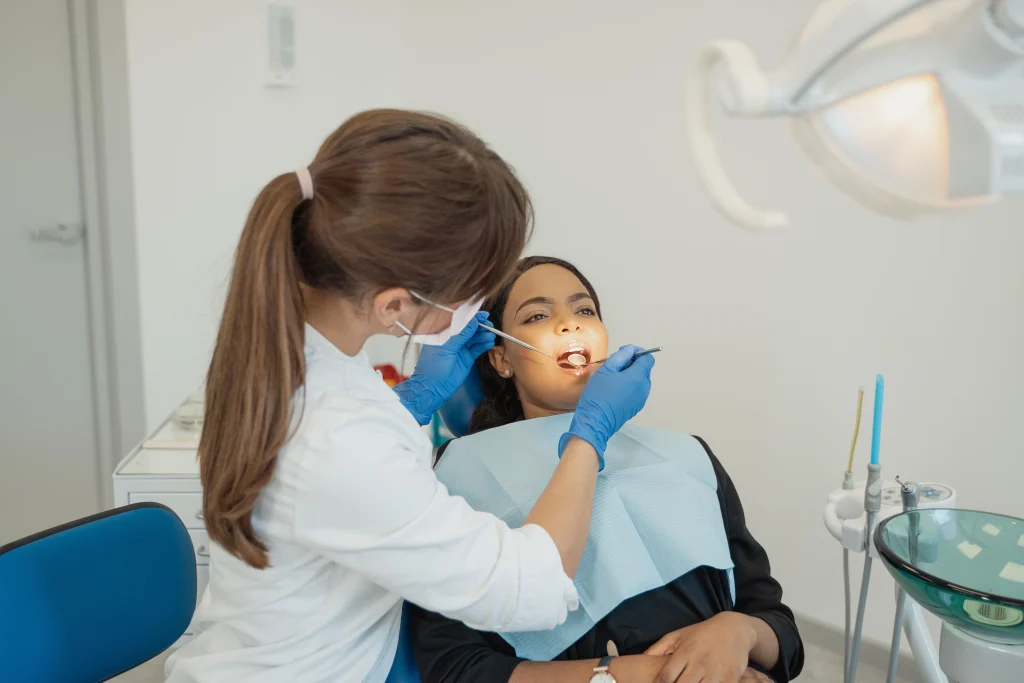
Restorative dentistry focuses on repairing damaged teeth and replacing missing ones. The goal is to bring your mouth back to a state where it functions properly, so you can eat, speak, and smile without difficulty, while also addressing how things look. If you have a cracked tooth, a gap from a missing molar, or bone loss in your jaw, restorative dentistry covers the procedures used to fix those problems.
At Periodontal Specialists, restorative dental services go beyond standard fillings and crowns to focus on advanced, surgically precise solutions. These include dental implants, bone grafts, crown lengthening, and full-mouth restorations for patients with complex needs.
What Does Restorative Dentistry Cover?
Restorative dentistry procedures address a range of conditions. The most common include:
- Tooth decay that has progressed past the surface enamel
- Single or multiple missing teeth
- Cracked or fractured teeth from injury or grinding
- Teeth that are severely worn down
- Bone loss in the jaw or advanced gum disease
The underlying cause matters. A patient with advanced periodontal disease, for example, may need gum and bone treatment before any restorative work can succeed. Placing an implant into a jaw with significant bone loss without first addressing that loss typically leads to implant failure.
Types of Restorative Dentistry Procedures
Restorative dentistry covers a range of treatments. The right one depends on how much tooth structure remains and whether bone and gum tissue are healthy.
- Fillings are the most straightforward and are used when decay has damaged part of a tooth, but the root and surrounding structure are intact. Composite resin fillings are most common today and are matched to tooth color.
- Crowns cap the entire visible portion of a tooth. They are used when decay or damage is too extensive for a filling, after a root canal, or to protect a tooth that has cracked.
- Bridges replace missing teeth by connecting an artificial tooth to crowns placed on surrounding teeth. They are fixed in place and do not require surgery, though healthy neighboring teeth must be filed down to accommodate them.
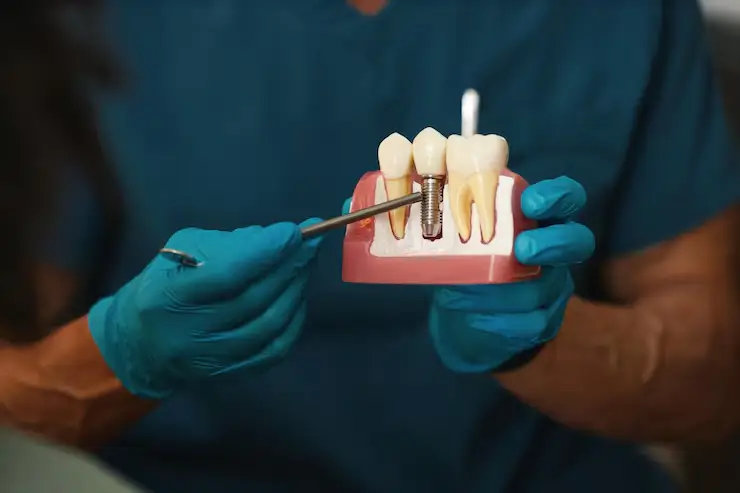
- Dental implants are a surgical option. A titanium post is inserted into the jawbone, where it fuses with the bone over several months. An artificial crown is then attached. Implants are not dependent on neighboring teeth and, in most cases, are the closest functional equivalent to a natural tooth.
- Bone grafting is often a prerequisite for implants when jawbone volume has been lost. Grafted bone material, which may be synthetic, from a donor, or from the patient, encourages the jaw to regenerate density before an implant post can be reliably placed.
- Gum tissue grafting is used when gum recession has exposed tooth roots. Restoring gum coverage protects against sensitivity and further recession, and is often necessary before other restorative work proceeds.
What Are the Main Restorative Dentistry Procedures?
Restorative dentistry procedures at the periodontal level are mostly surgical and often work in sequence. A patient needing an implant may first require an extraction, then a bone graft, then a healing period, then implant placement, and finally the crown from their general dentist. Understanding this process helps set realistic expectations.
Dr. Johnson at Periodontal Specialists is the clinic’s implant specialist, with several years of additional training in dental implants, bone grafts, and sinus lifts. When a patient comes in, either directly or through a referral, the treating periodontist walks through the full plan before any procedure begins, including post-treatment care guidelines.
Laser therapy is also available as part of the restorative toolkit. It uses focused light energy to target specific areas of tissue, reduce bacteria, and treat periodontal disease with less discomfort than traditional surgery in some cases.
What Are the Benefits of Restorative Dentistry?
The most immediate benefit is functional. You can speak clearly, chew food properly, and avoid the compensatory strain that often develops when people work around a damaged or missing tooth for too long.
Other than that, there are downstream health reasons to treat problems early. Untreated decay can spread to neighboring teeth. Bone loss that isn’t addressed accelerates over time, eventually leaving fewer options for implants. Infection from tooth decay can enter the bloodstream and affect general health in ways that extend well beyond the mouth.
Aesthetics are also important even when they may not be the only reason someone pursues treatment. Replacing a missing tooth or restoring a cracked one typically improves confidence in everyday interactions, like eating in public or smiling in photos.
What you must know is that advanced restorative work takes time. Implants require a healing period of months, and full-mouth restorations involve multiple visits across an extended treatment timeline. The results are generally durable, but require realistic planning. In many cases, coordination between the periodontist and your general dentist.
Are There Risks or Limitations of Restorative Dentistry?
Restorative work is generally predictable, but not without trade-offs.
- Research has consistently shown that dental implants achieve long-term success rates above 90%. However, they can fail, particularly in patients with bone loss, uncontrolled gum disease, or heavy smoking habits.
- Bridges require modifying healthy teeth, which is a permanent change.
- Crowns and fillings wear over time and may need replacement after ten to fifteen years.
For patients with active periodontal disease, restorative treatment typically cannot begin until the disease is controlled. Restoring a tooth in an infected environment is unlikely to produce lasting results.
When Should You See a Periodontist for Restorative Care?
Your general dentist handles many restorative procedures, but a periodontist is usually involved when the problem extends to the gum or bone. Signs that a referral to a periodontist may be appropriate include:
- Persistent bleeding or swollen gums
- Gum recession
- Loose teeth
- Bone loss visible on X-rays
- A tooth that has broken at or below the gumline.
Conclusion
Restorative dentistry is a category of care that begins with diagnosing what’s structurally wrong and then selecting the right approach to fix it. For patients dealing with bone loss, missing teeth, or gum recession, that often means working with a periodontist who can handle the surgical side before a general dentist completes the final restoration.
Periodontal Specialists treats patients across Minnesota with a focus on advanced, individualized care. If you’re in the area and want to understand your options, reach out to the team for restorative dental services in Red Wing, MN, to schedule a consultation.
Red Wing office: 2835 S Service Dr, Suite 201, Red Wing, MN 55066 |
Phone: (651) 388-4774
Hours: Monday–Thursday 8:00 am – 5:00 pm, Friday 8:00 am – 12:00 pm
Frequently Asked Questions
Many procedures are partially covered, though coverage varies by plan. Periodontal Specialists accepts most insurance plans and files claims on your behalf.
The full process typically takes several months. After placement, the implant needs two to six months to integrate with the bone before the final crown is attached by your general dentist.
No. While many patients at Periodontal Specialists come through a general dentist referral, you can contact the office directly without one.
Delaying treatment typically allows problems to worsen. Bone loss accelerates, decay spreads, and infection risk increases, all of which narrow your options and often raise the complexity and cost of treatment later.