TL;DR
- Missing teeth cause jawbone loss, shifting teeth, and bite problems that affect your facial structure and oral health.
- Dental implants are frequently touted as the best long-term solution, but they cost more upfront and require surgery.
- Options range from affordable dentures to advanced techniques such as All-on-4, which replaces full arches with just 4 implants.
- Your choice depends on your budget, the number of missing teeth, and your jawbone health. Consult a dental professional for personalized advice.
The Best Ways to Fix Tooth Loss
Losing a tooth as an adult is more common than you might think. The causes range from tooth decay and advanced gum disease, known as periodontitis, to trauma or injury.
A missing tooth may leave you feeling self-conscious, but the impact goes beyond appearance. Gaps can trigger a chain reaction of oral health issues, affecting your bite, surrounding teeth, and even your ability to eat or speak comfortably.
The good news is that today, more affordable and accessible solutions are available than ever before. Options like dental implants, dentures, and bridges can restore function and aesthetics. This article explores the top 10 most effective ways to replace missing teeth, explaining the pros, cons, and costs of each option.
Why It’s Important to Replace Missing Teeth
It can be tempting, especially if the missing tooth is in the back, to simply “live with it.” However, not replacing a tooth can lead to significant complications. Every tooth plays a role in your bite, alignment, and overall oral function, so losing even one affects the entire system.
Here’s why replacing a missing tooth is important:
- Preventing Jawbone Loss: Your jawbone relies on the pressure from chewing to stay strong. When a tooth is lost, that area of the jaw doesn’t receive stimulation, and the bone can begin to shrink or deteriorate. Over time, this bone loss can weaken the jaw and even change your facial appearance, creating a slightly “sunken” look.
- Preventing teeth from shifting: Since a gap is an open space, adjacent teeth will naturally shift in its direction. This “mesial drift” might create a snowball effect of problems such as crooked teeth, misaligned bite (malocclusion), and poor chewing.
- Maintaining Oral Health: Shifting teeth create new, hard-to-clean areas where plaque and bacteria can collect, increasing your risk of decay in your remaining healthy teeth.
- Improving Speech and Chewing: Missing teeth, especially those in the front, can affect how you speak and may lead to issues such as a lisp. When molars are missing, your ability to chew effectively is reduced, which can impact digestion and overall nutrition.
- Boosting Confidence: Replacing a missing tooth can restore your confidence to speak, laugh, and eat in public without reservation.
Top 10 Options to Replace Missing Teeth
From premium, long-lasting options to the most affordable fixes, here are the top 10 solutions your dentist might discuss with you.
- Dental Implants
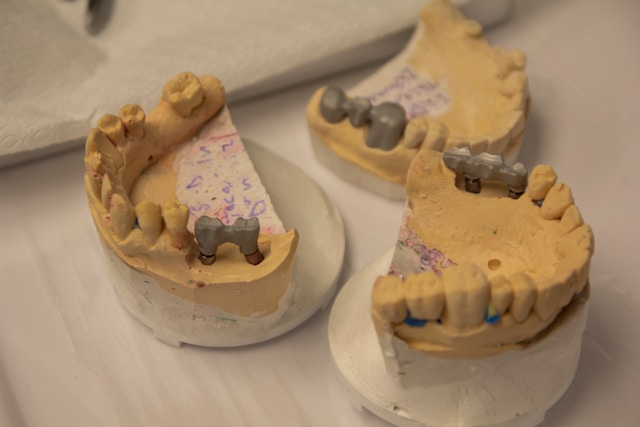
Dental implants are widely touted as the gold standard for replacing teeth. An implant is essentially a small, screw-like post, usually made of biocompatible titanium, that is surgically placed into the jawbone. The implant operates as an artificial tooth root, and through the osseointegration process, it fuses with the bone over several months.
This is the longest-lasting option, often lasting for life. Implants do not cause jawbone loss, do not require modification of adjacent teeth, and offer unparalleled stability.
However, they have a higher teeth replacement cost and require a multi-stage surgical procedure spanning several months.
- Implant-Supported Dentures
This solution bridges the gap between traditional dentures and full implants. It involves placing several implants (2-6) into the jaw, which then serve as anchors for a specialized denture. The denture securely attaches to the implants, avoiding the slipping and discomfort typically associated with traditional dentures.
Advantages include improved stability and chewing power. It also helps patients avoid the bone loss associated with traditional dentures.
- Traditional Dentures (Full or Complete)
A complete denture can substitute all missing teeth in the upper or lower jaw. It consists of a full set of acrylic teeth fastened to a gum-colored acrylic base that sits directly on the gums.
This is typically the most affordable and non-invasive option for full-arch replacement, and the process is much quicker than implant-based solutions.
However, dentures can slip or click while talking or eating, often requiring adhesives to stay in place. They may also cause sore spots. Most importantly, they do not stimulate the jawbone, so bone loss will continue over time.
- Fixed Bridges (Traditional)
A fixed bridge is a non-removable structure that “bridges” the gap left by a few consecutive missing teeth. The structure consists of two or more crowns, known as abutments, placed on the healthy teeth on either side of the gap. These abutments act as anchors for the false tooth (or teeth) positioned in between.
A bridge is highly stable and remains securely in place. It effectively restores both chewing function and aesthetics.
The major disadvantage with fixed bridges is that the adjacent healthy teeth must be permanently altered (ground down) to accommodate the crowns.
- Maryland Bridges (Resin-Bonded Bridge)
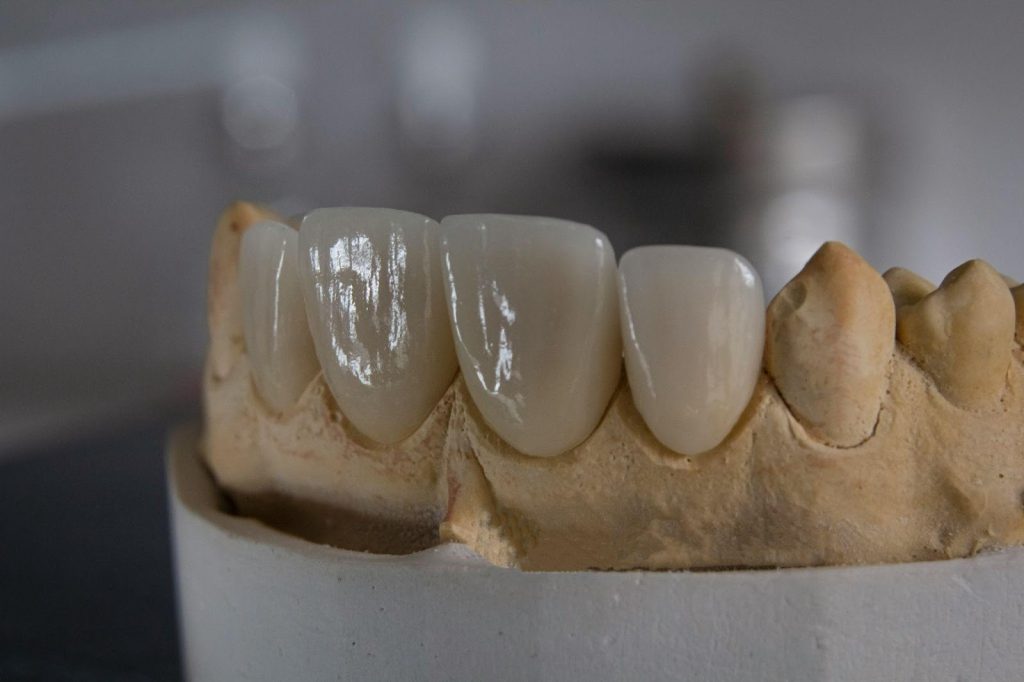
A Maryland bridge is a more conventional alternative to a dental bridge. Instead of using crowns, it relies on a metal or porcelain framework with small “wings” that are bonded in place to the backs of the adjacent healthy teeth.
It is most commonly used to replace missing front teeth, where biting forces are lower. Maryland bridges are often recommended for younger patients or as a temporary solution.
- Removable Partial Dentures
If you are missing several teeth in non-consecutive sections of your mouth, a removable partial denture can replace them. It features artificial teeth secured to a pink, gum-colored base, which is supported by either a metal or flexible framework. Small clasps anchor the denture to your existing natural teeth, helping keep it stable and in place during daily use.
This is a great way to replace missing sections of the tooth arch. The treatment is non-invasive, and the structure is simple to clean, since it can be removed at night.
However, the clasps can sometimes be visible, and they can be hard to get used to, just like other dentures.
- Snap-On Dentures (Overdentures)
This is a type of implant-supported removable denture that “snaps” securely onto special abutments placed on top of dental implants.
Advantages include greatly improved stability (particularly over traditional dentures that rely on suction and adhesive), chewing efficiency, and confidence. It remains removable; therefore, one can still easily clean the denture as well as the implants.
- Mini Dental Implants (MDIs)
MDIs are just what they sound like: smaller versions of traditional implants (less than 3mm in diameter). Their smaller size means they can often be placed in a less invasive procedure, sometimes in a single visit.
They are a more affordable type of dental implant and are often recommended for patients with some degree of bone loss, especially when traditional implants would require bone grafting.
They are less strong compared to conventional implants and aren’t suitable for specific complex conditions, particularly in the replacement of large molars.
- Flipper Teeth (Temporary Partial Denture)
A flipper is the simplest and most budget-friendly tooth replacement option. It is a lightweight, removable acrylic plate that holds one or more artificial teeth and stays in place by resting against nearby teeth or the palate.
It serves as a quick, temporary fix that fills the gap for appearance and confidence while you wait for a long-term solution, such as an implant, to heal.
However, flipper teeth serve as a quick, temporary fix that fills the gap for appearance and confidence while you wait for a long-term solution, such as an implant, to heal.
- All-on-4 Dental Implants
This is a very advanced technique and a commonly recommended full-mouth teeth replacement option. All-on-4 dentures restore an entire arch of missing teeth using just four strategically positioned implants. Two implants are positioned at the front of the jaw, and another two are positioned in the back at an angle to maximize stability and make the best use of the existing bone.
Because of this design, many patients can avoid bone grafting altogether, and a full fixed set of teeth is often attached on the very same day.
This option is suitable for individuals who have lost most or all of their teeth and want a long-term, non-removable solution without the higher cost, extended healing, or additional implants typically required for full-mouth reconstruction.
Final Thoughts
Only a trained and experienced dental professional can determine the best tooth replacement approach for your specific needs. If you have concerns involving bone support, gum health, or complex oral conditions, it is especially important to seek expert guidance.
At Periodontal Specialists, we can evaluate your oral foundation and help you choose a treatment plan that restores both function and confidence.
We are dedicated to supporting you through every stage of oral health and periodontal care. Our team uses advanced technology and proven treatment methods to protect and strengthen your smile. From gentle, non-invasive laser therapies to comprehensive surgical options, we provide patient-centric care for a wide range of needs.
Contact the premier periodontal specialists in Winona , today to learn more or schedule a consultation.
You can also visit one of our other branches in Rochester, Northfield, Red Wing, or Owatonna.
FAQs
How can we replace missing teeth?
A dental implant is the most commonly recommended solution as it replaces the root, preserves bone, and doesn’t damage adjacent teeth. A fixed bridge is the next-best fixed option while a flipper is the most economical temporary solution. For non-invasive options, you can consider dentures.
What is the difference between a fixed bridge and a removable denture?
A fixed bridge is permanently cemented into your mouth using your adjacent natural teeth as anchors. You cannot remove it. A removable partial denture clips onto your remaining teeth and rests on your gums. It can be removed for cleaning and before eating.
Can I replace multiple teeth at once?
Yes, there are many options such as dental bridges and dentures that can replace multiple missing teeth.