
TL;DR
- Early periodontal disease is the beginning stage of gum disease. It affects the gums and the tissues that hold the teeth in place.
- Many people first notice bleeding while brushing, slightly swollen gums, or redness around the gumline.
- At this point, the condition can still be controlled with proper care. Dentists can often recommend professional cleaning and better daily oral care.
- Paying attention to these early symptoms is important because untreated gum disease can slowly start affecting the bone that supports the teeth.
- Keeping gums healthy mainly involves a few basic habits:
- Brush and floss every day to remove plaque from teeth and gums.
- Avoid tobacco, eat a balanced diet, and stay hydrated
- Schedule routine dental visits for exams and professional teeth cleaning.
What is Periodontal Disease?
Periodontal disease is a gum condition that affects the gums and the tissues that support your teeth. Early signs often appear as mild swelling or tenderness in the gums caused by plaque buildup along the teeth. If it is not addressed early, the infection can gradually damage the gums and the bone that keeps the teeth in place.
In many cases, people do not realize there is a problem at first because the early symptoms can be easy to overlook or are usually painless. In this article, we have brought together the signs, stages, and prevention tips to help you better understand early periodontal disease and learn how to take care of your gum health.
What are the Signs and Symptoms to Watch For?
In our more than 50 years of combined clinical experience, our periodontal team at Periodontal Specialists has observed the following signs of early periodontal disease:
- Red or swollen gums: Healthy gums usually appear firm and light pink. When gums look red, puffy, or slightly swollen, it may be a sign that plaque and bacteria are irritating the gum tissue.
- Bleeding while brushing or flossing: Gums should not bleed during normal brushing or flossing. Frequent bleeding can be an early warning sign that the gums are inflamed.
- Persistent bad breath: Ongoing bad breath, even after brushing, may occur when bacteria collect along the gumline and release unpleasant odors.
- Tender gum tissue: Gums that feel sore or sensitive to touch can indicate irritation or inflammation caused by bacterial buildup.
- Slight gum recession: In the early stages, the gums may slowly begin to pull away from the teeth, making the teeth appear slightly longer than before.
- Plaque buildup near the gumline: A visible layer of plaque along the gumline can irritate the gums and contribute to the development of early periodontal disease if it is not removed regularly.
Stages of Periodontal Disease
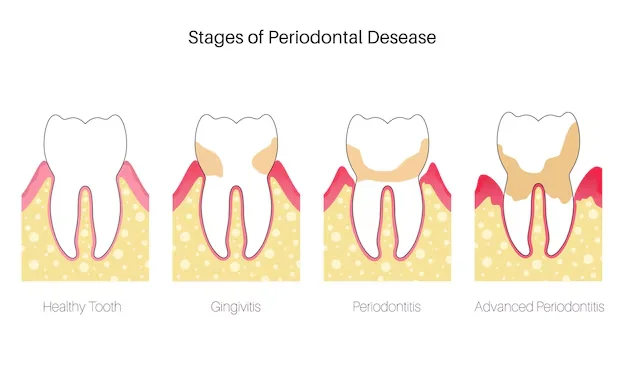
Our expert dentist, Dr. Thomas Wolfe, explains that periodontal disease usually develops slowly
over time. In many cases, patients do not notice the early changes in their gums because the symptoms can be mild. Understanding the stages can make it easier to recognize early periodontal disease and get treatment before the condition becomes more serious.
| Stage | What Happens | Common Signs |
| Gingivitis (Early Stage) | This is the earliest stage of early periodontal disease. At this point, the problem mainly affects the gums and has not yet damaged the bone that supports the teeth. | Gums may appear red or slightly swollen. Some people may see a little bleeding when they brush or floss their teeth. The gums may also feel a little irritated. This stage can usually be reversed with proper dental care. |
| Early Periodontitis | If gingivitis is not treated, the infection can begin to spread deeper around the teeth. The gums start pulling slightly away from the teeth, creating small spaces where bacteria can collect. | You may notice deeper gum pockets, increased gum sensitivity, and early signs of bone loss around the teeth. Professional dental treatment becomes more important at this stage. |
| Moderate to Advanced Periodontitis | In later stages, gum disease begins to affect the bone that supports the teeth. The infection becomes more serious and can weaken the structure supporting the teeth. | Gums may start to recede, teeth can feel loose, and bone loss becomes more noticeable. In severe cases, tooth loss may occur if the disease is not treated. |
What are the Treatment Options for Early Periodontal Disease?
We suggest the following treatment options for early periodontal disease, which usually focus on controlling the infection and helping the gums return to a healthy state:
- Professional dental cleaning: A dentist removes plaque and tartar from the teeth and around the gumline to reduce bacteria that irritate the gums.
- Scaling and root planing: This is a deeper cleaning that removes plaque from below the gumline and smooths the tooth roots so the gums can heal better.
- Improved oral hygiene: Brushing twice a day and flossing daily helps remove plaque and keeps the gums healthier.
- Lifestyle changes: Reducing smoking, eating a balanced diet, and managing health conditions like diabetes can support better gum health.
- Regular dental checkups: Routine dental visits help dentists spot early periodontal disease and treat it before it worsens.
Prevention Tips for Healthy Gums
According to our expert, Dr. Efstratios Choreftakis, preventing early periodontal disease is mostly about simple daily habits and paying attention to your gums.
Here’s what you can do:
- Brush your teeth twice a day: Take your time and gently clean along the gumline where plaque tends to build up. Using fluoride toothpaste helps protect your teeth, too.
- Floss every day: Flossing reaches the spots your toothbrush can’t, helping remove food and plaque that can irritate your gums.
- Visit your dentist regularly: Routine checkups and professional cleanings remove tartar that you can’t get rid of at home.
- Avoid smoking and tobacco: These habits slow healing and make your gums more vulnerable to infection.
- Eat a balanced diet: Foods packed with vitamins and minerals help keep both your teeth and gums strong.
- Stay hydrated: Drinking enough water helps saliva naturally protect your mouth from harmful bacteria.
- Watch for warning signs: If your gums bleed, feel tender, or look swollen, don’t wait. Seeing a dentist or a periodontal specialist early can stop small problems from turning into bigger ones.
Conclusion
Even the earliest signs of gum disease, like occasional bleeding, tenderness, or slight puffiness, are important signals from your body. Ignoring them can allow the condition to progress, sometimes without pain, until it becomes harder to treat.
Simple everyday habits like brushing and flossing properly, keeping up with regular dental visits, and noticing any changes in your gums can go a long way in keeping your mouth healthy. If you notice anything unusual, don’t wait it out. Our team at Periodontic Specialists can examine your gums, guide you with personalized care, and help get your gum health back on track.
For professional evaluation and treatment of early periodontal disease, schedule a consultation with our periodontal dentist in Rochester, Northfield, Red Wing, Owatonna, or Winona today.